(日本語の要約は最後にあります)
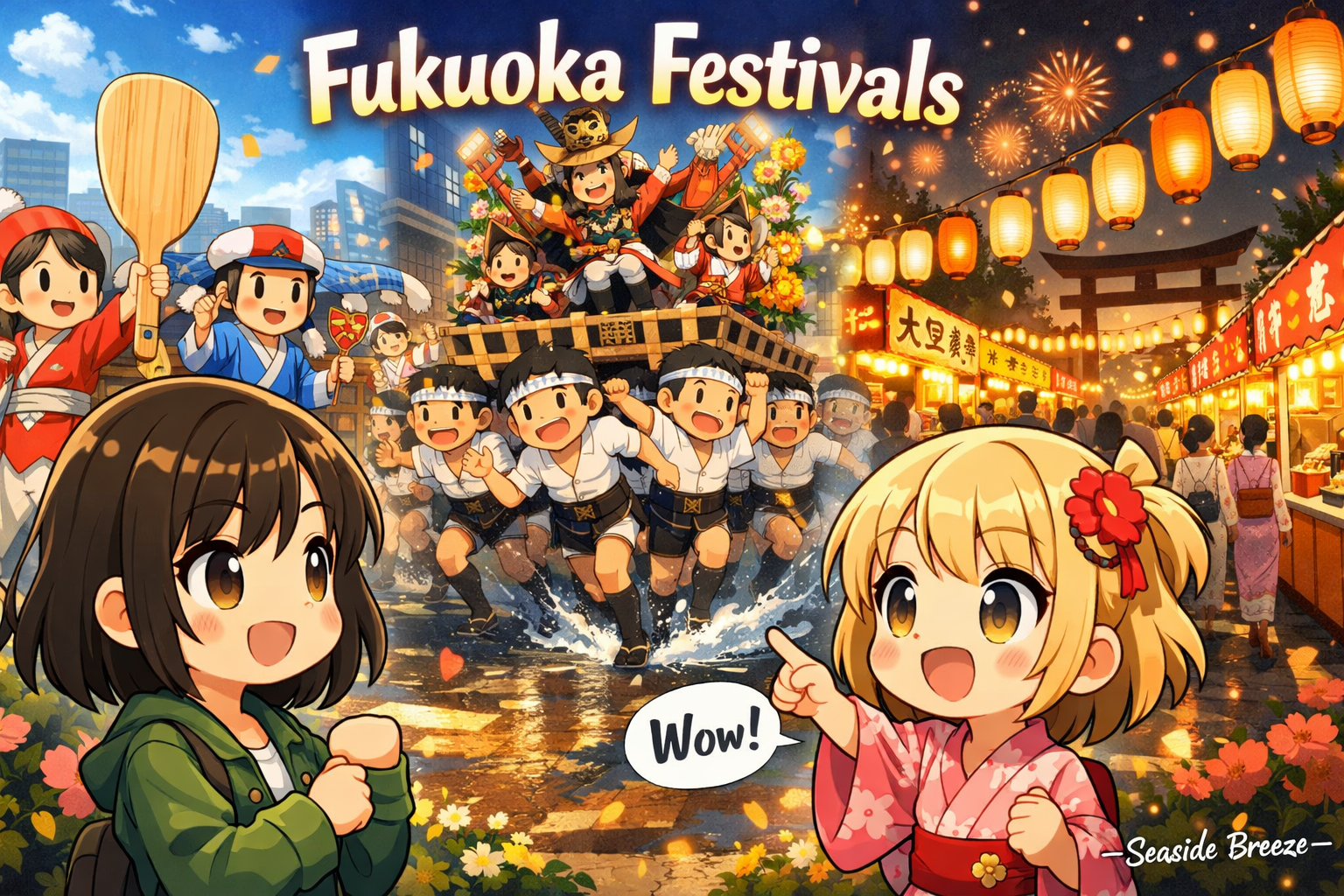
Fukuoka is a city of festivals.
Not just one festival, but several that quietly mark the rhythm of the year.
In spring, the city celebrates Hakata Dontaku.
It is often described as a port festival, reflecting the history of Hakata as a trading gateway.
People walk through the streets carrying wooden rice paddles called shamoji.
Groups parade through the city rather than performing on a stage.
For locals, it feels less like a show and more like the city itself slowly joining a celebration.
In the past, even the streetcars joined the festival.
Decorated trams covered with lights once ran through the streets.
They were called “Hana Densha” — flower trains.
The trams are gone now, but the tradition continues.
Today, decorated buses operated by Nishitetsu travel through the city during the festival.
Summer brings a completely different energy: Hakata Gion Yamakasa.
This is not simply a festival.
It is a race.
Teams representing different districts carry heavy floats called kakiyama through the streets at incredible speed.
The climax, known as Oiyama, takes place before sunrise.
Special trains and buses run through the dark morning hours so people can gather and watch.
But the festival actually begins long before that moment.
Ceremonies such as the ritual at Hakozaki Shrine mark the early stages of the event.
For many people in Hakata, Yamakasa is the biggest event of the year.
Children grow up participating in it, and some schools even allow absences for the festival.
Across the city, enormous decorative floats called Kazariyama are displayed in shopping streets and public spaces.
Many locals spend time walking around the city to see them all.
By the time the race ends, the city feels as if it has used up a great deal of energy.
And then autumn arrives.
At Hojoya, the festival held at Hakozaki Shrine, the approach to the shrine becomes a long street of food stalls.
Hundreds of vendors line the road, filling the night with lights, voices, and the smell of festival food.
For many locals, it feels less like a ritual and more like an enormous open-air market.
These festivals are very different from each other.
One is calm and wandering.
One is intense and competitive.
One is filled with food and crowds.
Yet together, they shape the rhythm of the year in Fukuoka.
They are not just events to watch.
They are moments when the city itself begins to move.
(今回のお話を要約するとこのような内容になります)
福岡は祭りの多い街で、春の博多どんたく、夏の博多祇園山笠、秋の放生会という三つの大きな祭りが一年のリズムを作っています
どんたくは港町らしい市民参加の祭りで、昔は花電車、現在は装飾された西鉄バスが街を走ります
山笠は地域ごとに山を担いで競うレースのような祭りで、飾り山を見て回る楽しみもあります
秋の放生会では箱崎宮の参道に数多くの屋台が並び、街は賑やかな雰囲気に包まれます
性格の異なる三つの祭りが、福岡の一年のリズムを形作っています


コメント