(日本語の要約は最後にあります)
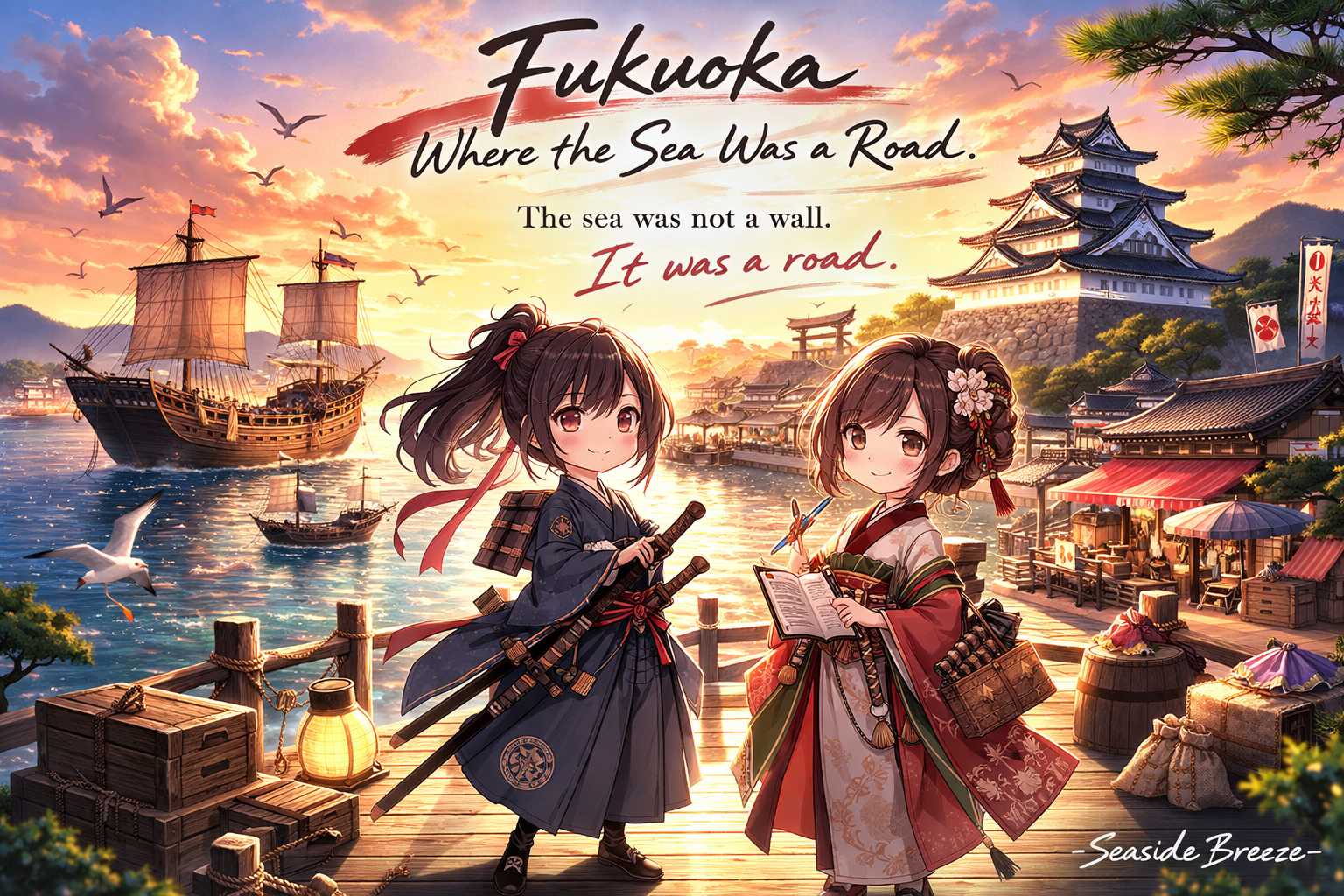
Fukuoka sits on the western edge of Japan.
On a map, it can look like an “end.”
But if you look across the water, it was never an end at all.
For a long time, the sea here was not a wall.
It was a road.
Because of that, Fukuoka became one of Japan’s cultural gateways.
People, skills, and ideas crossed the water and arrived here.
Not as something exotic, but as something practical—something to use, learn, and pass on.
In very old times, many newcomers from the Korean Peninsula and the continent settled in this region.
They brought weaving, metalwork, and other techniques that quietly shaped daily life.
Along with tools and skills came new ways of writing, organizing, and thinking.
Fukuoka did what gateways do:
it received things.
And then it made them local.
Hakata, in particular, developed a different kind of city life.
It was not only a place ruled by warriors.
It was also a merchant town with a strong sense of autonomy—sometimes compared to Sakai in that spirit.
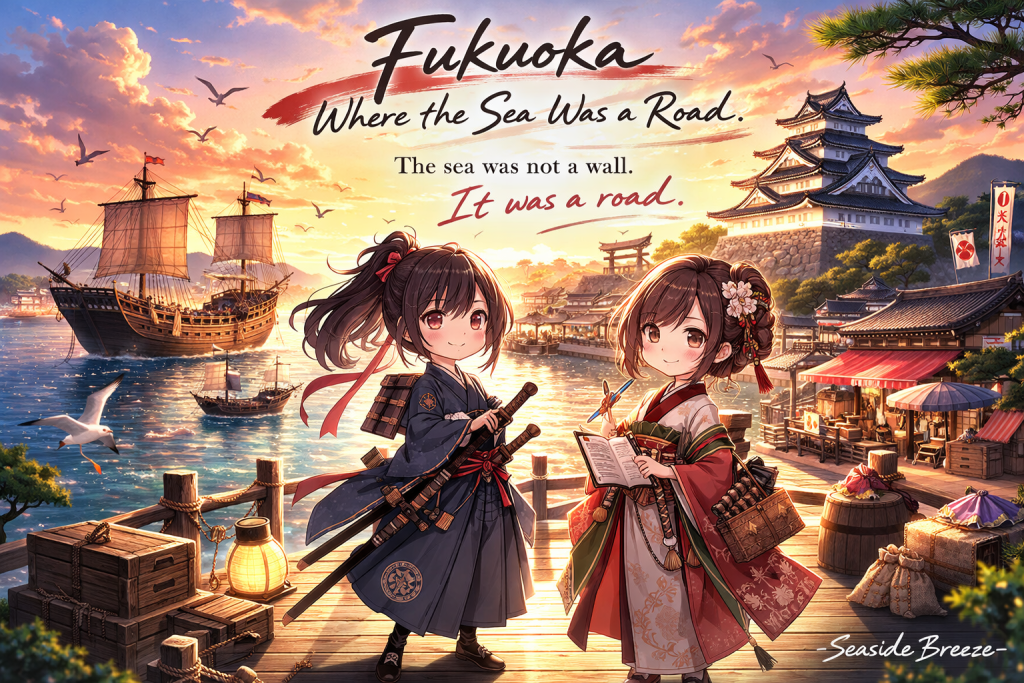
Even today, you can still feel the double character of the area:
Fukuoka as a castle town,
and Hakata as a trading town.
This is not a closed place.
It never really was.
It has long been connected to the outside world,
open to what comes in,
and surprisingly good at turning “foreign” into “familiar.”
Maybe that is part of why Fukuoka feels light on its feet.
The sea was not a border.
It was a road.
Or maybe it is just me.
(今回のお話を要約するとこのような内容になります)
福岡は日本の西に位置し、古くから海を通じて外とつながってきた土地です。海は壁ではなく道であり、渡来人や技術、知識が入り込む「文化の入口」でした。博多は商人の町として自治的な気配を持ち、武士の城下町的な福岡と並ぶ二つの顔が、今も街の空気に残っています。

コメント