(日本語の要約は最後にあります)
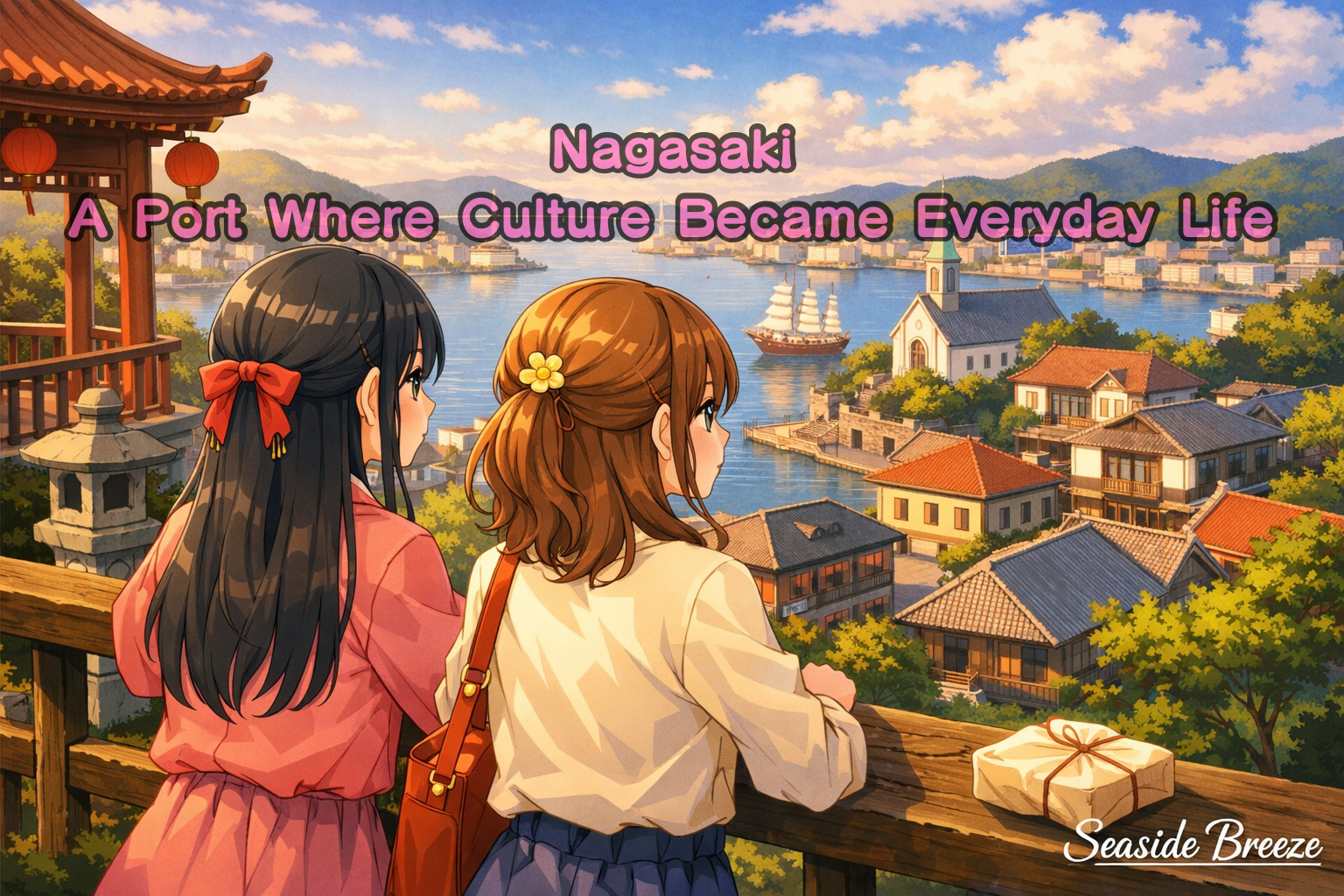
When people think of Nagasaki, they often picture a historic port that connected Japan with the outside world. That image is true, but it still feels a little too simple. What makes Nagasaki interesting is not just that foreign things arrived there. The deeper story is that many of those things stayed, mixed with local life, and slowly became part of the region’s ordinary culture. 
That is why Nagasaki feels different from many other parts of Japan. In some places, culture grew mainly from castle towns, farming villages, or inland trade routes. Nagasaki developed through the sea. Ships brought goods, but they also brought habits, tastes, technologies, and ideas. Over time, those influences did not remain separate. They were absorbed into daily life, and that process gave Nagasaki a character that still feels slightly different even now. 
Food is probably the easiest place to see this. Nagasaki champon is now known across Japan, but its roots lie in the city’s connection with Chinese communities. Official tourism sources trace its creation to the late Meiji period, when Chen Pingjun of Shikairou created it in Nagasaki as a filling, affordable dish tied to Chinese food culture in the port city. That background matters, because champon is not just a local noodle dish. It reflects the fact that different communities were living close enough to shape one another’s everyday meals. 
Castella tells a similar story from a different direction. In Nagasaki, even a simple sponge cake carries the memory of international contact. Official sources connect castella to Portuguese influence in the 16th century, and over the centuries it was adapted to Japanese tastes and methods. So when people eat castella in Nagasaki now, they are not just eating a sweet. They are also tasting a small piece of how foreign culture was naturalized and made local. 
The same blending appears in the city’s streets and buildings. Areas such as the former foreign settlement districts still preserve a mood that is hard to mistake for anywhere else in Japan. Western-style houses, slopes facing the harbor, stone paths, and old church neighborhoods all suggest that Nagasaki was not only receiving foreign visitors for a short time. It was a place where foreign residents actually lived, and where that presence left a visible mark on the city itself. 
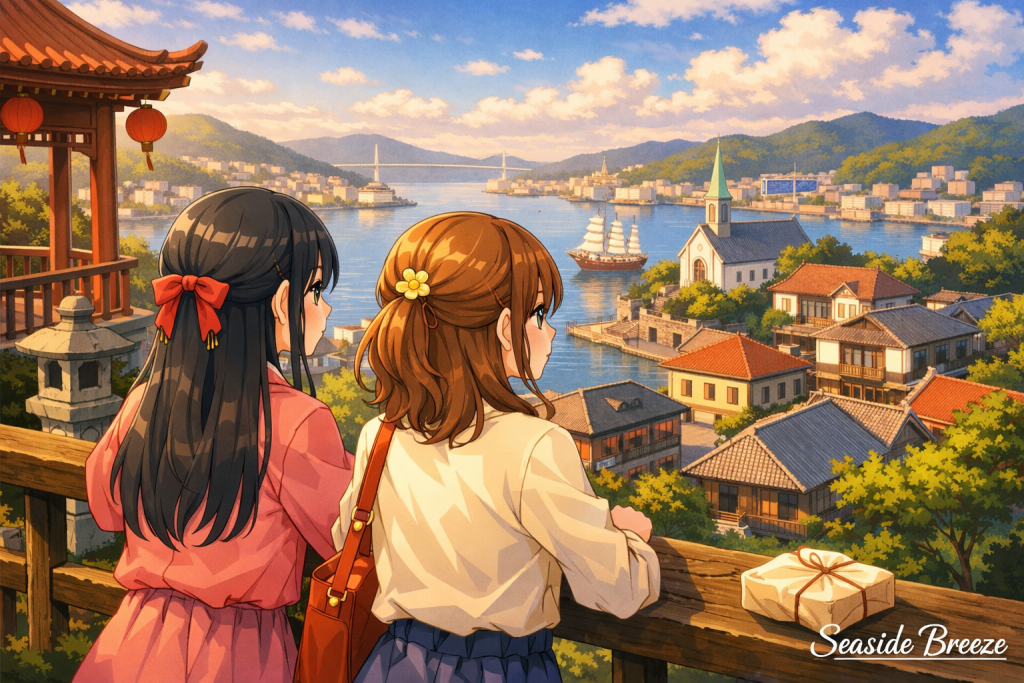
Glover Garden is one of the clearest symbols of that atmosphere. It sits on a hill overlooking Nagasaki Port and brings together historic Western-style buildings connected with the former foreign settlement. It is easy to enjoy it simply as a scenic place, but it means more than that. The view of the harbor below and the preserved residences above make it easier to imagine the period when Nagasaki was becoming one of Japan’s most distinctive meeting points between domestic life and overseas influence. 
If there is one place that best represents this story, though, it is probably Dejima. During Japan’s period of national isolation, Dejima was the only place where the Dutch were allowed to live and trade in Japan. Because of that narrow opening, Nagasaki became far more than a port for goods. It became a gateway for European knowledge as well. Medicine, science, and Dutch learning entered Japan through this limited contact zone, and that gave Nagasaki a cultural role that was larger than its physical size. 
That point is especially important. Nagasaki did not become unique because it copied foreign culture in a dramatic or decorative way. Its uniqueness came from repeated contact, careful adaptation, and long familiarity. Chinese food became local comfort food. Portuguese sweets became part of local identity. Dutch trade led to the movement of knowledge, not just merchandise. Seen that way, Nagasaki’s culture was not made in one moment. It was formed slowly, through ordinary life. 
That is why Nagasaki is such an interesting prefecture to read through culture. Its special quality is not only in famous landmarks or dramatic history. It is in the way international exchange became visible in meals, neighborhoods, architecture, and learning. If the first step to understanding Nagasaki is to look at its narrow sea gateways, the second step is to see what came through them. What arrived was not only trade. It was a way of living shaped by contact with the wider world. 
(今回のお話を要約するとこのような内容になります)
長崎の魅力は、ただ海外に開かれていたことだけではなく、外から入ってきた文化が土地の暮らしに溶け込み、日常そのものになっていったところにあります
ちゃんぽんやカステラのような食べ物、グラバー園や旧外国人居留地の街並み、そして出島を通じて入ってきた蘭学や医学まで含めて、長崎は「混ざった文化がそのまま根づいた港町」だと言える県です 


コメント